Fabric bundles, faux fur and what a care label owes you
Fat quarters, ten-inch squares, fur by the strip and lace by the yard. What each cut is for, and what the Care Labeling Rule does and does not require.
Written by Tatuo. Guidance quoted from U.S. Federal Trade Commission, read 19 August 2026.
Why fabric is sold in strange rectangles
Quilting cotton leaves the loom at roughly 42 to 44 inches wide. That is not a marketing choice. It is the width the loom is built to weave before the edges fray and tension drifts. Most of what we cut and ship in our fabric line started as a bolt at that width, even when the customer never sees it that way.
A quarter yard cut straight from the bolt is a long narrow strip, around 9 by 44 inches. Cut that same quarter yard in half along the fold and you get a fat quarter, 18 by 22 inches. Same area of cloth, different shape, and the shape is the point. A fat quarter sits flat on a cutting mat and gives a quilter enough surface for a block or a pocket.
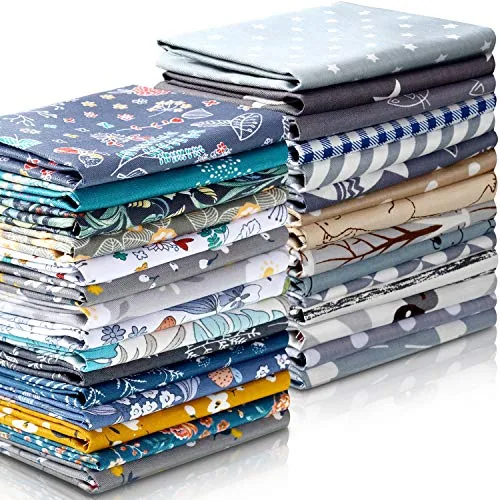
From there the cuts get smaller and the packs get bigger. A charm square is 5 by 5 inches. A layer cake is 10 by 10. Both come off the same bolt, so a layer cake piece and a fat quarter share a side. Our 30 piece cotton bundle is sold in 10 by 10 squares for the same reason a quilter would cut them at home. Thirty squares is enough to cover a small quilt top without leftovers.
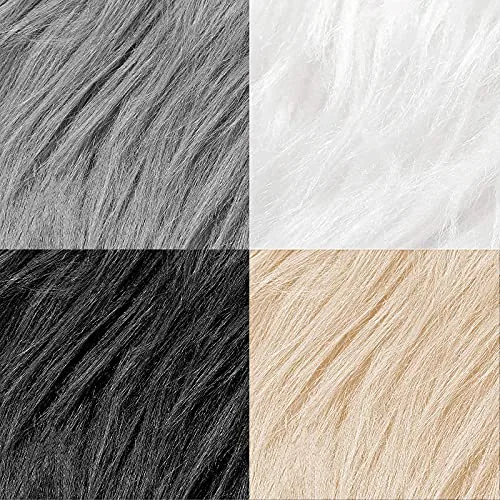
The faux fur squares follow the same logic. The 4 piece set is 10 by 10 inches because that handles a single motif on the pile without waste. The single 60 by 18 inch piece is closer to a half yard on the length and a narrower cut on the width, which is what the fur loom produces. We do not pretend these are standard cuts. They are the cuts the material gives us, in counts that suit the work.
The cuts, and what each one is for
We cut fabric to the size a project actually uses, not to the size a bolt comes in. A fat quarter at ten by ten inches covers a patchwork block, a small pouch front, or a strip in a pieced table runner. We sell those by the piece and in bundles of thirty, so a quilter can lay out a top without buying yardage she will not finish. The thirty-piece cotton bundle in our catalog is patchwork floral, with squares cut from the same cloth so the colors hold together across the stack.
The long cut solves a different problem. Our white fake fur ships as a single piece at sixty by eighteen inches, roughly the back panel of a cushion or the body of a small costume piece. We do not sell faux fur by the yard because the pile catches on a hard fold and the fold leaves a mark on the surface. A flat cut, packed flat, is what the material asks for. The four-piece faux fur pack at ten by ten inches is for sampling color before a larger project, or for craft pieces where a short nap is enough.
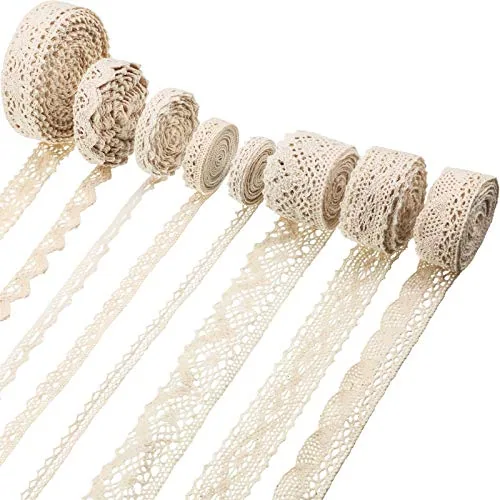
Lace is sold by the running yard, and forty yards is a working length for edging a set of household linens or trimming a batch of made items. We settled on forty because it is enough to finish a project without leaving a half-used spool, and short enough that the whole run can be checked before the first cut goes in.
| Cut | Usual size | What it suits |
|---|---|---|
| Fat quarter | About 18 by 22 in | Bags, pouches, patchwork blocks, doll clothes |
| Ten-inch square (layer cake) | 10 by 10 in | Quilt blocks with no cutting at all |
| Charm square | 5 by 5 in | Small patchwork and appliqué |
| Fur strip | Long and narrow, by the piece | Trim, cuffs, hoods, costume edges |
| Trim and lace | By the yard | Edges, hems, wrapping, card making |
Cotton bundles and quilting maths
A ten-inch square is the unit we cut our cotton bundles to. It's also the unit a lot of home quilters plan around, and thirty squares lands where it does in a pack for a reason. Thirty is not a round number pulled out of the air. It covers a small project with squares left over, and it falls short of a single-queen top without forcing a second order.
A baby quilt, roughly thirty-six by fifty-two inches, eats about twenty-five squares with a standard half-inch seam. Our thirty-pack leaves a few for a backing strip, a sewn-on label, or a small quilt for a sibling. A throw, closer to fifty by sixty-five, runs through about fifty squares, so one pack gets you most of the way and a second pack finishes the top. Past that, twin and larger sizes want eighty squares or more, and the pack stops looking generous.
This is where the care label earns its keep. The squares are cotton, the seams are cotton, and the wash cycle that gets one clean gets the other clean. We print the fiber on the pack because we'd rather you match the bundle to the project than find out at the first wash.
Faux fur is not fabric, it is pile
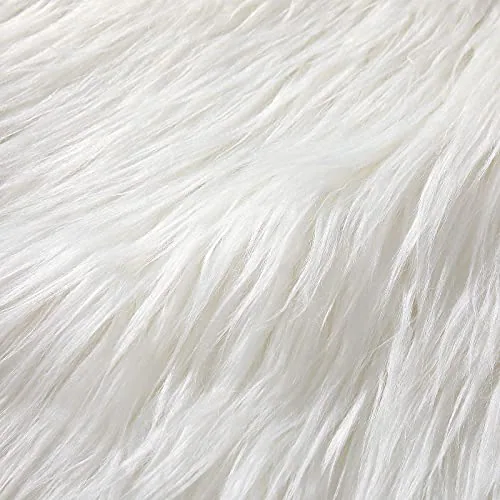
A length of faux fur is not a fabric in the usual sense. The base is a thin woven or knit backing, and from it stand thousands of short fibers, the pile. Run your hand one way and the fibers lie flat. Run it the other way and they stand up rough. The direction they lean is the nap, and the nap is the whole job.
Pieces cut from the same panel have to face the same way. If two patches meet at a seam with their naps running in opposite directions, the seam reads as a visible line even before color is compared. The eye picks up the change in sheen first, the color shift second. We tell anyone working with our faux fur pieces to lay them out before cutting and to mark the nap direction on the back with a small arrow.
Cut from the back whenever you can. The backing is stable and gives you something to mark and to hold. Cutting from the front shears the pile at random heights and leaves a ragged, choppy edge that no amount of brushing hides. A sharp pair of fabric scissors, working from the back, takes the backing cleanly and leaves the pile standing.
Heat is the other thing to watch. Polyester pile melts at temperatures a household iron reaches without effort. The fibers fuse to each other and to whatever is underneath, and the patch is ruined. Steam from the wrong side is usually enough to settle a seam, and a pressing cloth buys a small margin if heat has to pass through.
Wax print, and treating it with respect
Wax print is a printed cotton cloth with a dense, often geometric pattern on both faces. The pattern is part of how the finished piece reads, so cutting direction matters. We cut our wax prints into fat quarters so a project gets enough cloth to lay out a panel without buying a whole bolt. A fat quarter is sized for one project rather than a yard, enough for a cushion front, a tote panel, or the body of a child's top.
The cloth takes a seam cleanly with a standard cotton thread. A fresh cut will fray at the edge, so finishing or binding the seam before the finished piece is washed keeps the print crisp. The print is set in the dye, but the first wash can release loose dye from unfixed areas, especially where two colors meet. Wash the cut pieces in cool water before sewing, separately from lighter fabrics, and the cloth behaves the way the pattern suggests it should.
A care label on a wax print piece owes the reader the temperature it was tested at, not a generic machine wash. We name cotton and the cut on our packs. The rest of the instruction belongs to the maker who finishes the seam, because how a wax print is washed after construction depends on the thread, the lining, and the trim, none of which we picked.
Lace and trim by the yard
We sell our lace trim by length, not by the single piece. The 40-yard cotton trim on this page is sold as one card, one continuous run, the kind of count that lets a maker start a project and finish it without a second order. The pack count is the figure we lead with. A 40-yard pack covers several small projects, or one larger piece with length left over, and that is how we set the price.
Trim is where the category acts a little differently. Lace trim sold by the yard falls under a part of the federal textile labeling rules that treats narrow fabric as its own category. When a fabric is sold as trim and the width stays below the threshold the rule sets, the requirement to print full fiber-content disclosure at the point of sale does not apply the way it does on a wider cut. We still print what the law asks for on the card or sleeve, and we still print what we recommend for care, but the card is lighter than the one on a full yard of quilting cotton.
The care direction we add is ours. When the rule lets us leave a line off the card, we still print one, because we would rather a maker read what we recommend than guess. The pack states the fiber and the care we stand behind. That is the work of a small label on a small pack: it tells you what is in it and how we would treat it.
Trim up to five inches wide
U.S. Federal Trade Commission, Clothes Captioning: Complying with the Care Labeling Rule, read 19 August 2026
What the Care Labeling Rule requires
The Care Labeling Rule is the FTC rule at 16 CFR Part 423, and it sets the floor for what a care instruction has to be. It reaches manufacturers and importers of textile wearing apparel, and it reaches piece goods sold to consumers for making wearing apparel at home. A shop that resells a finished garment sits downstream of that obligation, not on top of it.
What the rule asks for is narrower than people assume. A garment label has to carry a washing or a drycleaning instruction, and it has to warn about a step a buyer might reasonably assume is safe when it is not. The instruction has to survive the useful life of the piece. What the rule does not do is turn every bolt of cloth in a craft shop into a regulated garment.
Our packs sit one step back from that line. Most of what we sell in fabric is piece goods, and a craft bundle bought by count and color is often not on its way to becoming a shirt. Where the rule plainly applies to a pack, we follow it. Where it does not, we still print what the mill has told us about the fiber, because a rinse in a sink is not evidence and we will not dress it up as any.
The Care Labeling Rule requires manufacturers and importers to attach care instructions to clothing and some piece goods.
U.S. Federal Trade Commission, Clothes Captioning: Complying with the Care Labeling Rule, read 19 August 2026
Reasonable basis, and why it matters to you
A care instruction that isn't backed by evidence is worse than no instruction at all. A wrong claim on a care label costs the buyer more than the item itself. It costs them the reason to read the next label we print. So we hold ourselves to a simple rule: every care statement on our catalog has a reasonable basis, and we can point to what that basis is.
We don't write care labels. The maker of the goods prints them, and we report what is printed. If a pack of cotton lace trim carries a washing symbol, we record it. If a pack of faux fur squares carries none, we say "care instructions not provided" rather than guess. Where a category is governed by a public rule, we name the rule: textile labelling in the US falls under the FTC's Care Labeling Rule, and we work to that. We don't print our own badges, certifications, or standards we haven't held in our hands.
What this means for the buyer, in plain terms. The care note you read on our page is the care note printed on the pack, or it is a reference to the public rule that covers the category. Where the maker left the field blank, we leave it blank too. Where a material is named on the pack, we name it. Where it isn't, we say so. A reasonable basis is not a guarantee against every mishap, but it is the difference between an honest page and one that invents its way into your laundry.
You must have a reasonable basis for all care instructions and warnings
U.S. Federal Trade Commission, Clothes Captioning: Complying with the Care Labeling Rule, read 19 August 2026
Where the rule stops and we keep going
The care-label rule gives direction, but it is not a full answer for every piece of fabric. A care label is meant to give care information for a finished product. A fabric cut is selected for a project, and its count, measurement, and material are part of the product information. Our Fabric & Sewing line includes 206 products, from faux fur and cotton bundles to wax print fat quarters and lace trim, cut to sizes that suit a project rather than a bolt. A fabric cut and a finished garment do not ask the same questions.
We keep going after the rule stops. For a cut that the rule does not cover, our guidance starts with the count, measurement, and material when those facts are available. It also makes clear when no care instruction is present. We give the count when one is stated. We give the measurement and material when the product states them. That means a 30-piece cotton bundle can be understood as a bundle, not mistaken for one 10 x 10 inch square. It means a 4-piece faux-fur pack can be understood as four pieces, while the White Fake Fur Fabric is shown as a single 60 x 18 inch cut.
We do not turn a missing instruction into a guess about cleaning or handling. If a material or measurement is not stated, we leave it out rather than infer it. The guidance should make the product clearer, not more certain than the record allows. That is where the care label stops and the maker’s experience begins.
Labels for clothing must have a washing or drycleaning instruction.
U.S. Federal Trade Commission, Clothes Captioning: Complying with the Care Labeling Rule, read 19 August 2026
Washing, by material
We work in a small set of fibers, and each one wants something different from the washing machine. Cotton bundles, lace trim and the muslin cloth family take a normal warm cycle and a tumble at medium heat. The fibers are sturdy enough to handle the agitation, and the heat sets nothing harmful in. What they do not like is bleach: it yellows the natural tone over time, and weakens cotton fiber on repeated exposure.
Faux fur and the polyester pile that gives it body ask for the opposite treatment. Heat is the enemy. A cool wash on a gentle cycle keeps the backing from delaminating and the pile from matting. We air-dry our samples flat, away from direct sun, because a hot dryer will crush the loft flat and there is no way back from that. The same goes for velvet and satin, which crush and shine under pressure and heat in equal measure.
Viscose, the fiber behind our Korean exfoliating mitts, behaves like cotton when dry and like a wet paper towel when wet. It loses a lot of strength in water, so a delicate cycle, cool water and a flat dry are worth the extra ten minutes. A machine spin at full speed can stretch the weave out of shape before the item has even left the drum.
The care symbol on the pack is the short version of all this. Where we can, we print what the fiber needs rather than what fits on the label.
| Product | Material | Regular care |
|---|---|---|
| White Fake Fur Fabric, 60 x 18 in | Polyester | Hand wash cool, never tumble dry |
| 4-Piece Faux Fur, 10 x 10 in, 4 colors | Faux fur | Hand wash cool, never tumble dry |
| 30-Piece Cotton Fabric Bundle Squares Patchwork Floral, 10 x 10 in | Cotton | Machine wash warm, tumble dry low |
| 40-Yard Vintage Cotton Lace Trim, Beige | Cotton | Hand wash cool, dry flat |
Shrinkage, and how to plan for it
Cotton moves when it meets water. Anyone who has watched a finished quilt pull away from its lining knows the number. When we print 10 by 10 inches on a cotton bundle square, that is the size off the cut, not the size after a first wash. Pretending the fabric will hold its dimensions is a worse promise than saying it will not.
Our faux fur pieces are polyester pile, and polyester does not behave like cotton. The cut size on a 60 by 18 inch piece is close to what you will work with, though a light steaming before cutting helps the pile settle. Lace trim is cotton. Muslin bags are cotton. When the fiber on the pack reads cotton, plan on shrinkage. When it reads polyester, plan on the size you see being the size you get.
The simplest rule is one sewers argue about: pre-wash, or do not. We leave that to the project. A pre-wash in warm water and a flat dry finishes the first move, so a 10 by 10 inch square becomes closer to 9.2 by 9.2 inches before any cutting. If you work with the full cut size instead, buy a few extra squares. What does not work is a finished piece that comes out of the wash smaller than the template you cut it from.
Our care guidance is the public rule the category falls under, plus what is printed on the pack. We do not write our own care instructions and stamp them with a logo. The label on a Tatuo pack is not a promise from a back office. It is the rule we are bound by.
The short version
We make fabric the way we make everything else: counted out so a project is covered in one order, not measured off a bolt. Across our sewing line that means cotton bundles cut to squares, fat quarters in wax print, lace trim by the yard, and pieces of faux fur sized for a single garment or a small craft. The pack count is the decision, and we pick it from how a piece actually gets used. A thirty-piece cotton bundle is a quilt that does not need a second order.
A care label is the part of the product we do not write and the part we read most closely. It states the fiber, the wash temperature, the way the piece dries and what it will do over time. We do not add a badge of our own next to it, and we do not repaint what the mill has already said. If a label names polyester pile on a faux fur, that is what shows on the page. If it names no material at all, we leave the line blank rather than fill it with something we cannot check.
What we add is the count on the front of the pack and, where the mill names one, the material. Dimensions go on too when the maker states them. The work that decides whether a fabric holds up after the tenth wash has already been done before the label goes on. Our job is to pass that on without softening it, and to set the count so the pack matches the project.
More from the Tatuo journal
- Korean exfoliating mitts: how to use one properly
What an Italy towel actually does, how the viscose weave works, how often to use it by skin type, and the four mistakes that turn exfoliation into irritation. - Setting up a craft table when small parts are on it
Rhinestone tools, beads and kit pieces are small by design. What the federal small parts rule says, how to lay a table out, and how to keep a class busy.