Setting up a craft table when small parts are on it
Rhinestone tools, beads and kit pieces are small by design. What the federal small parts rule says, how to lay a table out, and how to keep a class busy.
Written by Tatuo. Guidance quoted from U.S. Consumer Product Safety Commission, read 19 August 2026.
The problem with a good craft kit
A good craft kit gets judged by what comes out of it, not by what is in the bag at the start. Rhinestones, beads, sequins, brads, grommets, clasps, jump rings, the dotting pen that lifts them off the backing. These are the pieces a kit is bought for, and they are also the pieces that disappear the fastest. A 2-piece rhinestone picker on a shared table is a tool for one person, briefly, between searches. A 6-piece set of lighted tweezers covers a corner of a classroom. A 30-piece set of iron-on patches sounds like a lot until three people pull colors at once and the next person is hunting for navy.
The problem with a good craft kit, then, is geometry. The pieces that make the project possible are the pieces that migrate across the table, slide under a cutting mat, get vacuumed up with the scraps, or end up in a sleeve because someone stood up too quickly. A pack sized for one crafter in one sitting is, in our experience, not enough. It is rarely enough even for the one crafter.
This is the part of the table we have learned to count carefully. Our craft and party line is set up in counts that assume a table, not a person. Twenty-four hair scrunchies covers a class of children changing colors mid-project. Thirty iron-on patches gives a group of jackets enough variety that two people do not reach for the same one. Six durags in a pack is enough for a household to keep colors straight through a wash cycle, not a single event.
The honest reason a good craft kit feels short is that the small parts were never counted the way they are spent.
What counts as a small part
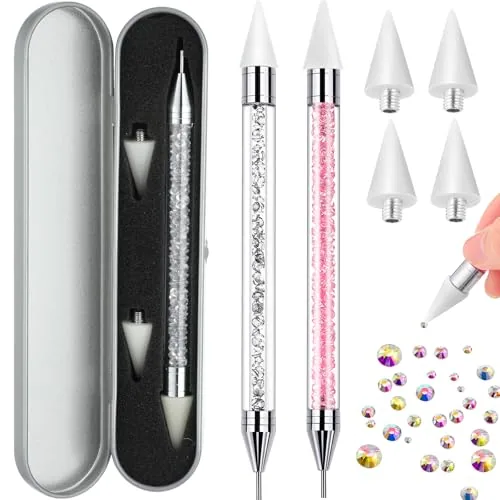
A small part on a craft table is anything that can be picked up between two fingers and lost between the same two fingers a minute later. Rhinestones. Beads. Buttons. O-rings. SIM tray pins. Hooks and eyes. The dotting tips on a rhinestone picker. The mirror head on an inspection tool when it unscrews. Most of what we sell in our Tools & Gadgets and Tape & Fixings lines lives in this category by feel, even when the piece itself is steel or foam. A 300-count pack of SIM eject pins is nothing but small parts. So is a 48-piece o-ring kit. So is a single rhinestone dotting pen, once the cap is off.
The question matters because a craft table is rarely one person's. Children visit. Pets walk under it. A bead on the floor at 8 p.m. is the same bead a toddler finds at 8 a.m. We think about this when we decide what goes in a pack and how the pack opens. A 200-piece bag of name labels is not the same household decision as a 48-piece o-ring kit, even if both end up in the same drawer. The pack count changes the math. A single rhinestone is a small part. A 200-piece bag of name labels is a small-parts situation.
There is a formal definition, and it has been written down. The federal rule on what counts as a small part follows. It is shorter than most people expect, and the language around it has settled.
A small part is any object that fits, without compressing and in any orientation, entirely into the small parts cylinder
U.S. Consumer Product Safety Commission, Small Parts Ban and Choking Hazard Labeling, read 19 August 2026
The cylinder, and what it stands for
A cylinder on a craft table is usually bought as one piece, then refilled as it empties. Most cylinders we see hold one tool type: cotton buds, paper clips, beads of a single size. The cylinder matters less for what is in it today than for the commitment it records. A jar of 500 beads says the maker is staying with a project long enough to need a refills supply, not a sample.
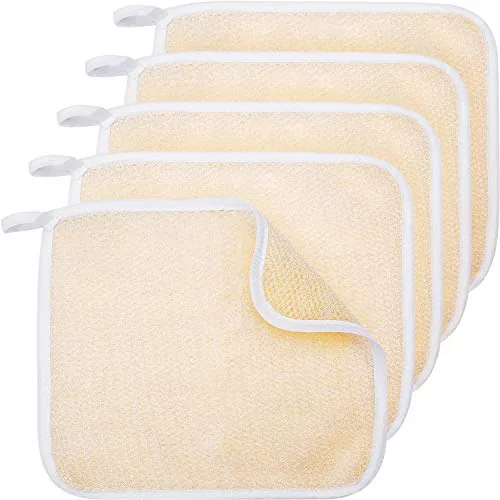
Our work runs in the same direction. Twelve exfoliating mitts is four colors by three, a count chosen so a household can rotate through them as they wear out, not a marketing round number. Three hundred SIM eject pins is a workshop's worth, not a desk drawer's worth. When we set the count on a pack, we start from how the thing gets used up: a class, a market stall, a wedding favor, a season of one craft. The cylinder on the table, like our packs, is a promise that the work will keep going past the first use.
What sits in the cylinder is small. What the cylinder stands for is the opposite of small. A maker who keeps a cylinder in reach has decided that the small parts of a craft are not interruptions. They are the craft. Treating them with the same care given to the main piece, keeping them sorted, keeping them refilled, is how a table becomes a workspace and not a staging area. That attitude is the one our packs are built around.
which approximates the size of the fully expanded throat of a child under three years old
U.S. Consumer Product Safety Commission, Small Parts Ban and Choking Hazard Labeling, read 19 August 2026
Which products the rule covers and which it does not
The rule covers toys and other articles intended for children under three years old, where a small part could come loose and pose a choking or suffocation risk. A small part is anything that fits entirely through a test fixture designed to simulate the throat of a young child. In our craft range, that includes items like rhinestone pickers, small o-rings, SIM tray eject pins, and the loose beads, buttons, and craft eyes that ship inside our craft kits and bundles. The same applies to fabric squares and patches that could fray into smaller pieces, and to foam tape once a roll is cut down.
Several categories are excluded from the rule, even when they contain small pieces. Balloons are treated under a separate standard because of the latex inhalation risk. Books and other paper articles, including greeting cards and stickers, are excluded as a category. Crayons and other writing materials fall outside the rule, as do clothing accessories such as buttons, snaps, and zippers, which sit under textile flammability rules instead. Grooming items like brushes and combs, and feeding items like cups and bibs, are covered by their own product standards.
Modelling clay, paint sets, rattles, and pacifiers each have dedicated safety rules written for them, so the small parts regulation stops short of including them. We note the small parts warning on any pack we list where the rule applies, and we keep the excluded categories labeled by their own standard rather than folding them under the small parts banner.
The warning label, and what it is telling you
The crossed-out circle with a small figure inside it, the one printed on the back of a pack or stamped onto the plastic, is not something we wrote. It is a regulated warning required on consumer products that contain small parts, and it follows a federal rule that has been in place for decades. We print it on any pack where a piece could pass through a cylinder roughly the size of a young child's throat, which is the technical line the rule draws.
On our range that means the rhinestone picker dotting pens, the O-ring kits, the SIM card tray removal needles, the foam tape pieces cut to short lengths, and the smaller hooks and fixings. Anything that drops below roughly one and a quarter inches in any dimension and could be mouthed by a child under three gets the label. Packs that do not contain parts that small, like the muslin bags or the cotton fabric bundles, do not carry it.
What the label is actually telling you is simple. Keep the contents away from children under three, and supervise older children who might hand a piece to a younger sibling. It is not a suggestion and it is not a hedge. The label exists because small parts and small airways are a bad combination, and the rule was written after enough accidents to make the warning non-optional.
We include the label because the rule requires it on the products that need it, and because the pack is the right place for it. The warning travels with the parts, and it stays with them when the pack goes onto a craft table.
Certain children’s products that are or contain small parts, balloons, small balls, or marbles must be labeled to warn consumers not to buy them for children under a certain age.
U.S. Consumer Product Safety Commission, Small Parts Ban and Choking Hazard Labeling, read 19 August 2026
Laying out a table for a party
A table for eight children is a count we think about often. Our Craft & Party line runs to 269 products, and most of them were counted for a moment like this: one kit per seat, with a margin for a child who drops a piece under the table or wants to start over. When the pack says twelve and the table is eight, the four left over are not waste. They are the next time someone breaks one.
A dotting pen comes two to a pack, so for eight children we open four packs, sixteen pens, and put one at each place setting. A pack of thirty iron-on patches gives each child a few to choose from, with a stack left for the next table or the next week. Our 24-piece rainbow hair scrunchies are the same kind of math: one on the table per child, the rest within reach for the child who wants two. We pick pack sizes so the count survives an enthusiastic guest.
The harder part is the small parts themselves. Rhinestones, sequins, and the small embellishments that travel with our craft kits all behave the same way on a table: they migrate. A flat-weave cotton or muslin cloth in a calm color helps, because what falls is easier to spot than on a pattern. A shallow kraft tray under each station keeps the working pile where the hands are, and at the end of the party the pieces pour back into a single muslin bag. We sell the cloth, the bag, the patch, the pen. The table is yours to lay out.
| What you put out | How many | Why that number |
|---|---|---|
| Craft kits | 8 | One each, so nobody waits |
| Spare kit pieces | 8 | Something is always dropped |
| Rhinestone or dotting tools | 2 | Shared, and only with an adult at the table |
| Cloths for hands | 4 | Two in use, two drying |
| A shallow tray per child | 8 | A tray is what keeps a small part on the table |
Laying out a table for a classroom
A classroom table is a small-parts problem before it is a craft problem. Rhinestone pickers, iron-on patches, o-rings, name labels: anything under a thumb's width will roll, bounce, or get pocketed if the surface is bare. We count our craft kits for whole classes rather than single projects, so one kit per child ends the sharing argument before it starts.
Give every station a shallow tray. A corrugated tray, a baking sheet, or a folded piece of card catches the small pieces that would otherwise migrate to the floor or a neighbor's pile. Card sleeves work for the smallest items, like sim eject pins or rhinestone dots, where a flat surface is not enough. The tray gives small hands a defined edge to work against and gives the adult a defined area to scan.
Rotation matters when there are more children than stations. Half the table works on a kit-based activity while the other half does a non-tool task, like sorting name labels. Our party and craft counts are set so a single order can cover a rotation: thirty patches for thirty kids, fifty muslin bags for a class giveaway, two hundred labels for the whole year and a few spares.
The adult stands at the side of the table, not the head. From the side you can see every hand and every tray at once, and you are close enough to step in when a tool slips or a patch lands glue-side up. Standing over the table blocks light and pulls children's focus upward. Walk the length of the table instead. The position reads as available, not as supervising, and the work gets done with fewer interruptions.
Tools that make small pieces manageable
Small parts have a way of migrating off a craft table. A picker that picks up what your fingers can't see, tweezers that hold what the picker set down, and a tray shallow enough that nothing rolls out of sight. We build our packs around that order of operations, and around the fact that you usually need six pairs of tweezers before you need one new head.
The 2-Piece Rhinestone Picker Dotting Pen puts two wax tips in one tube: a round dotting end and a square end for slightly larger stones. Stainless steel, weighty enough to feel like a tool rather than a pen. The wax head is replaceable in practice, by buying another pen, which is part of why we sell it in a pair: one for the table, one for the second hand that reaches across. At $9.99 for two, the per-piece cost is lower than buying single picks at a register where they ring up one at a time.
Tweezers on a craft table run through a small amount of damage per session. The 6-Piece Lighted Tweezers pack six pairs so the bent tip, the tip that lost alignment, or the tip somebody walked off with doesn't end the project. The light is built into the barrel, which makes lost stones easier to find against felt. Stainless steel bodies, angled tips suited to rhinestone work.
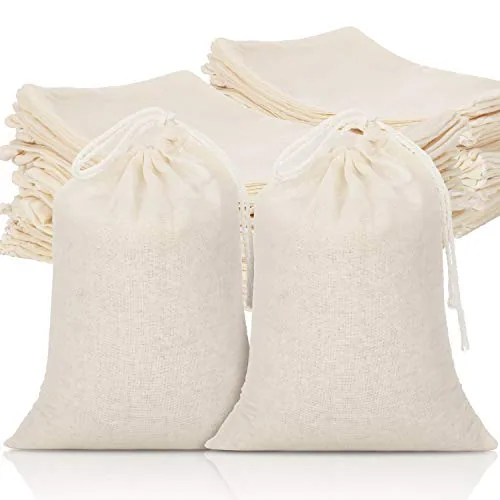
Sorting is where most of the mess actually comes from. The 200-Piece Muslin Bags Burlap Drawstring, 3 x 4 in, gives you a bag per color, per size, or per stage of the project. Cotton muslin, tied shut with the drawstring, small enough to drop into a larger bag when the table has to clear. At $26.99 for 200, the per-piece figure works out below what a single small envelope costs at a register.
The other half of "small pieces manageable" is keeping them on the table. Shallow trays, one per category. We don't sell trays, and we don't recommend a specific one, but the principle is the same: shallow enough that nothing rolls into a shadow, separate enough that a stray stone shows up against felt rather than against another stone.
Counting in and counting out
When small parts land on a craft table, the first useful move is to know what you have. Open the pack, count the pieces, say the number out loud if you need to. We'd rather you started with 30 patches, 12 mitts, or 200 name labels and trusted the count on the packaging than spent the first half hour wondering whether you have enough.
We hold our own packs to the same rule. Before a run is printed into packages, the team that checks samples pulls finished pieces from the run and counts them by hand. If the count is off, the run is held. We do not round a 48-piece kit up to a 50, and we do not ship a 200-piece bag that arrives at 184.
The other half is the part most people skip: counting what is left when the work is done. A rhinestone picker slipped off the table. A label that bonded to the wrong shirt. A muslin bag that left with the order. None of these are defects. They are the natural loss rate of any table covered in small parts, and the honest answer is to count what remains, not to assume the starting number. We work the same way when we check samples. The figure that comes back is the one we trust. The figure that went out is what we started with.
If you run a class, a market stall, or a Saturday at the kitchen table, the same habit travels. Count in, count out, and you will know what to reorder before the next session, not after.
Storing what is left
The hardest part of a craft table is not the making. It is walking back into the room a week later and finding a bag of rhinestones half open, an inspection mirror face-down on the felt, and a foam-tape roll stuck to its own shelf. We think about that second session when we count things into a pack, because the count is what survives the project.
Small parts want a small home. Zip bags, the tiny boxes our reachers and tweezers come in, even the cellophane sleeves from a rhinestone picker all keep a thing from migrating. We work with clear fronts wherever we can, so the part is identified without opening anything. A 48-piece O-ring kit, a 300-piece SIM pin set, or a 2-piece foam tape is not a job to label, but it is a job to put back in one place, and a clear front is what lets you put it back without opening it.
For things that come apart mid-project, the count in the pack matters more than it looks. A 4-piece faux fur square set, six pieces of velvet durag, twelve exfoliating mitts: each piece has a job, and when one goes missing in a session, the pack is the inventory. Our packs are printed with the count on the front for that reason. The number is part of the storage.
For leftovers that have lost their pack, a small labeled bin with a piece of tape on the lid does the same work. The bin is the count. The lid label is what tells you whether to open it or not.
Ages, honestly
Some of our packs are full of small things. Rhinestone pickers, sim card tray pins, o-rings, iron-on labels, hair scrunchies, craft kit contents. A craft table is also a place where a smaller person will reach if a smaller person is in the room. The question of age is real, and we are not going to brush past it.
We don't set our own age range on top of the pack's. We don't have a testing lab, and we don't print a safety certificate we haven't held in our hands. So when a product states a recommended age, that is what we say. When the pack does not state one, we say that too. The label is the source. Our job is to carry it across, not to improve on it.
Writing an age from a desk, looking at a product photo, would be a guess. It might be close. It might also be off by enough to matter, and we would have no way of knowing which. So we don't guess. We describe what is in the pack: count, material where named, size, what the part does. The call on a three-year-old versus a seven-year-old sits with the adult who set the table, and with the wording on the packaging.
For packs that are mostly small parts, the count does some of the talking. Two hundred labels, three hundred sim pins, forty-eight o-rings. Anyone reading that can tell what kind of clean-up the project needs. We name the count and the part, and we stop there. That is as far as we can go without inventing a standard we don't have.
The short version
We design our packs around the way a job is actually done, not the way a shelf is stocked. The same logic applies to the small parts that turn up on a craft table. A rhinestone picker, a SIM tray pin, a packet of foam tape: each is a tool that has to be reachable without becoming the mess it was meant to solve. The way you set up the table decides whether the project moves or stalls.
Three habits do most of the work. A flat, lint-free work area. A tray or shallow dish to confine loose pieces. A separate resting place for tools with tips that get bent or lost. Get those right and the rest is taste. We have written this article for the reader who wants specific habits, not a roundup of products. The aim is fewer runaway beads, fewer pins in the carpet, and a table that can be cleared at the end of an hour without sweeping the floor first.
What follows is four setups. A rhinestone and bead station. A repair station for small electronics and SIM work. A sewing and patch station with iron-on pieces and labels. A general craft table for parties, classes and weekend projects with children. Each setup uses the same three ideas: a clean base, a contained working area, and a tool within reach that is correct for the part in the hand. Most of what we will mention is counted in packs because that is how we think. One tweezer is a tool. A pack of six is a station ready to go.
More from the Tatuo journal
- Korean exfoliating mitts: how to use one properly
What an Italy towel actually does, how the viscose weave works, how often to use it by skin type, and the four mistakes that turn exfoliation into irritation. - Fabric bundles, faux fur and what a care label owes you
Fat quarters, ten-inch squares, fur by the strip and lace by the yard. What each cut is for, and what the Care Labeling Rule does and does not require.